
Last updated September 24, 2026
Free in-home measure and quote - PGT, CGI and CWS impact lines compared on your actual openings, style by style
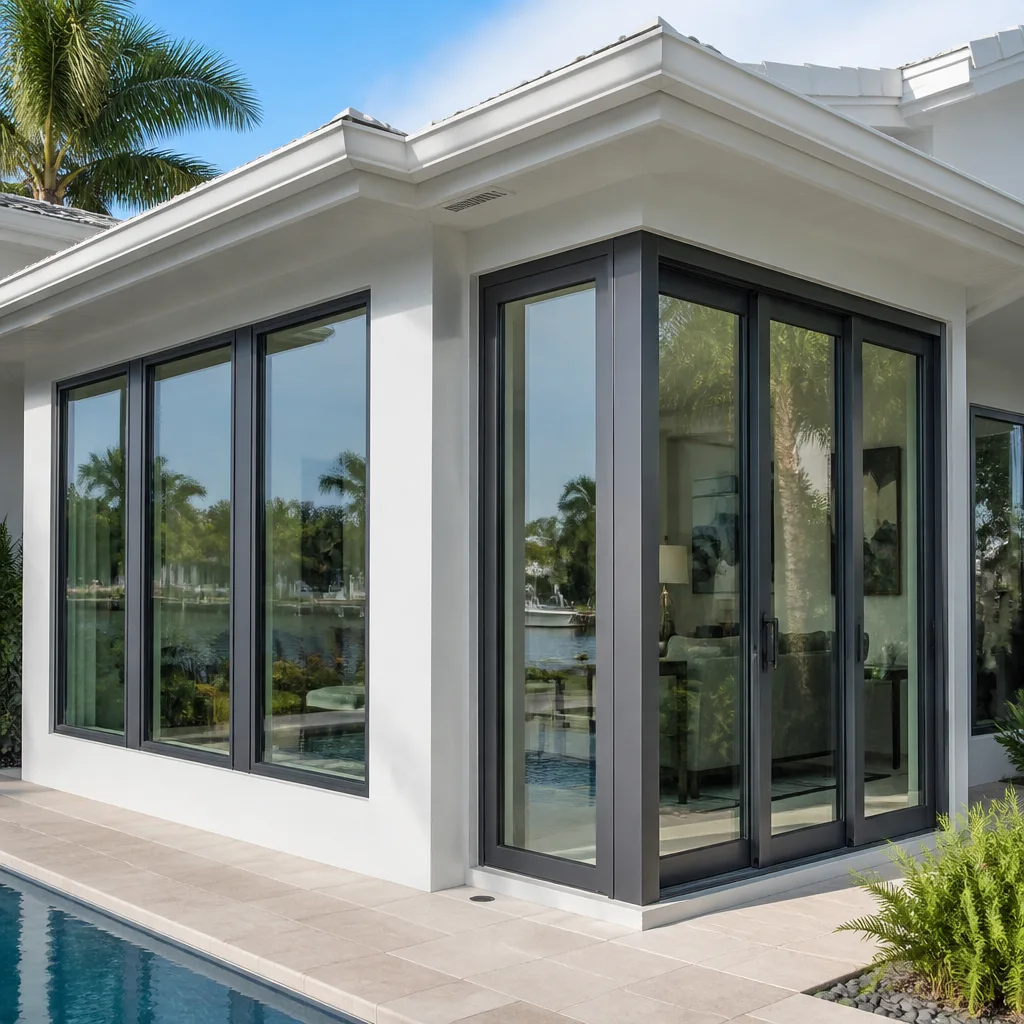
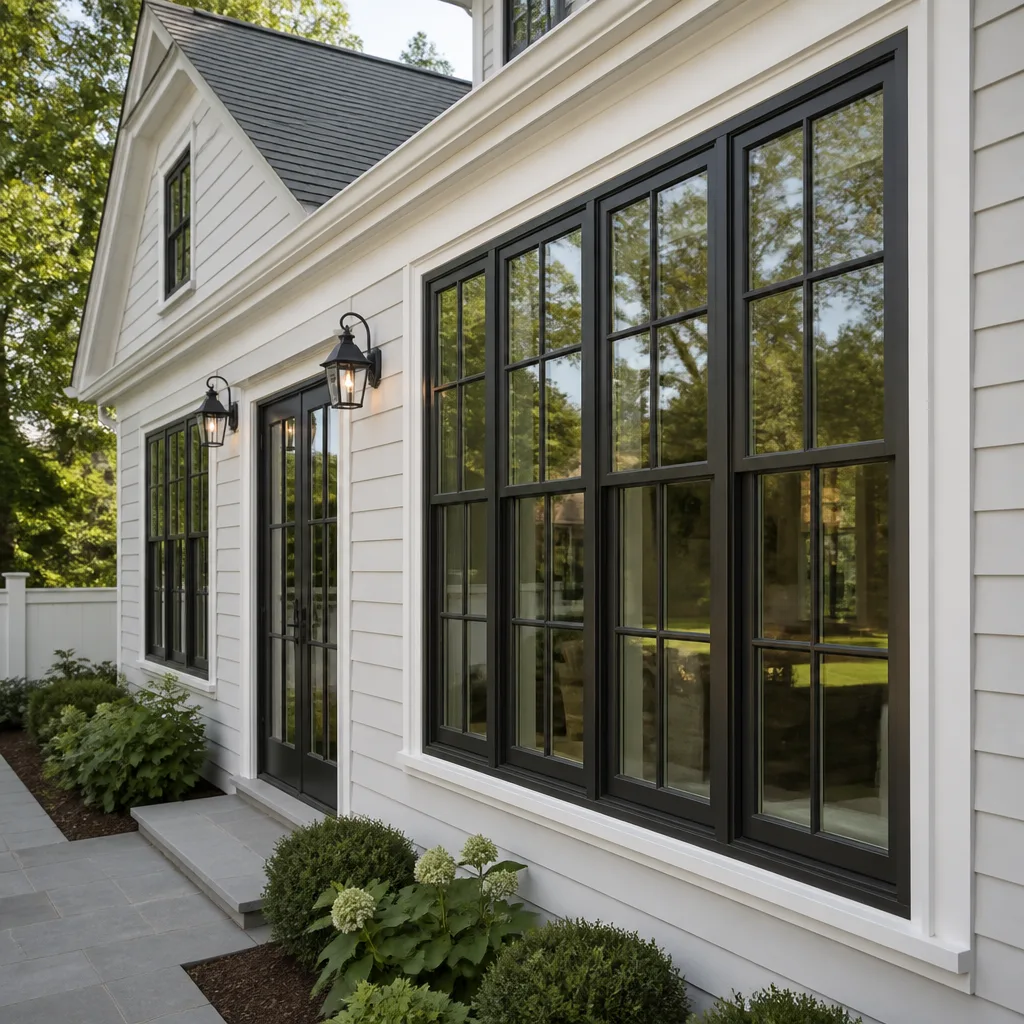
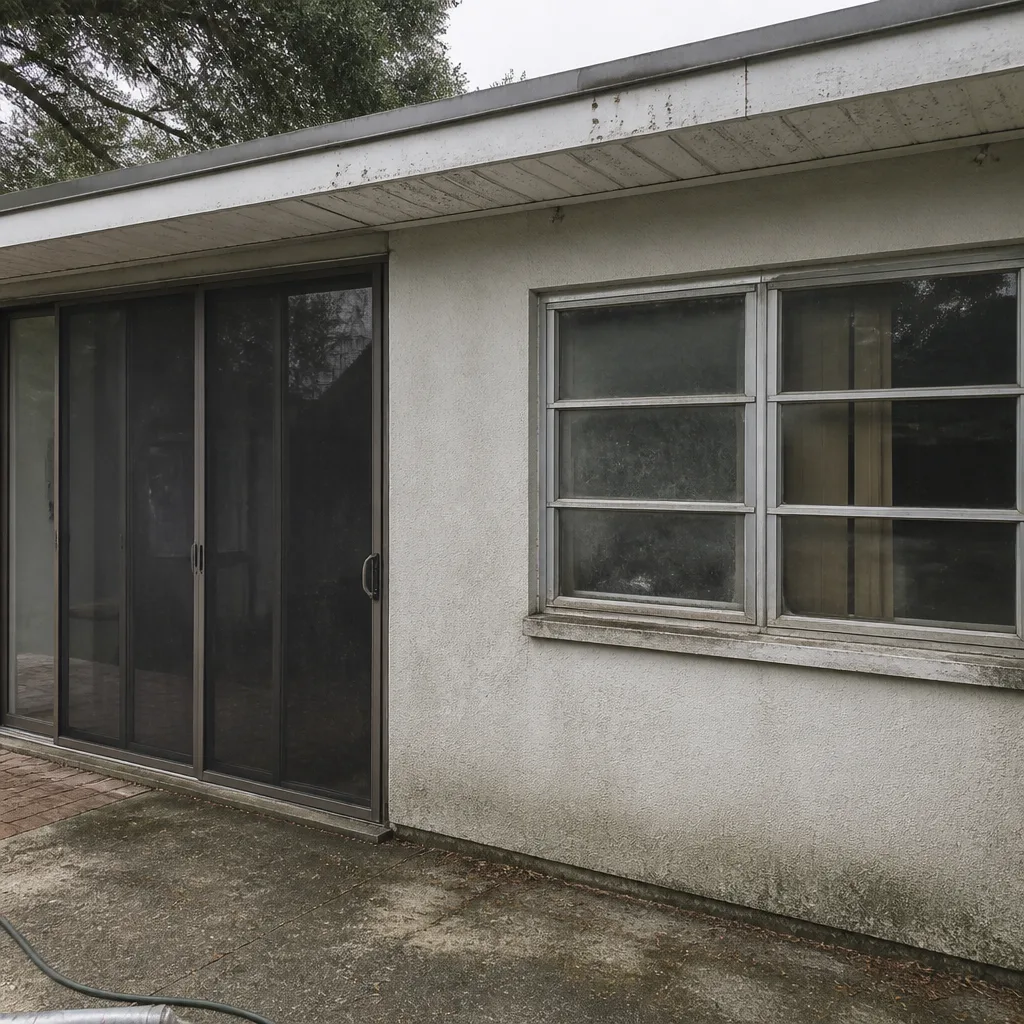 Before
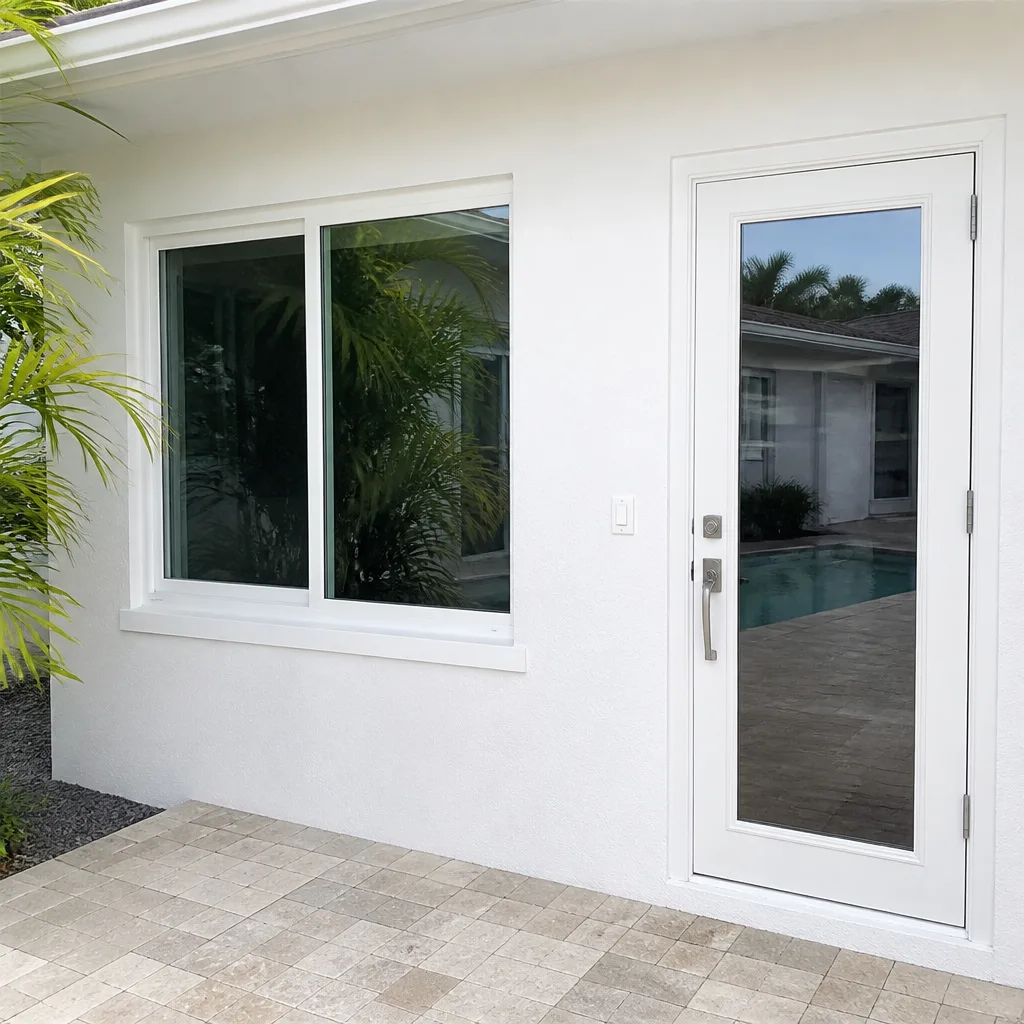 After
After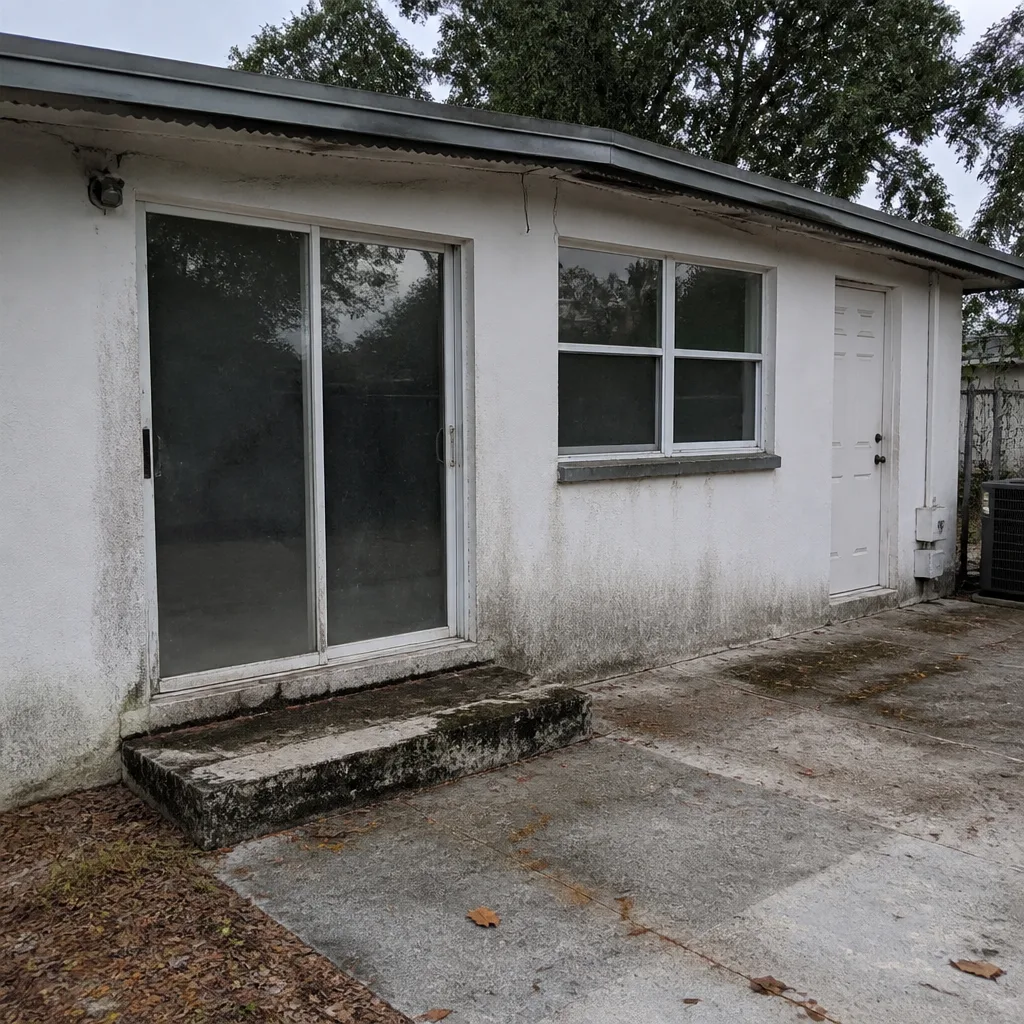 Before
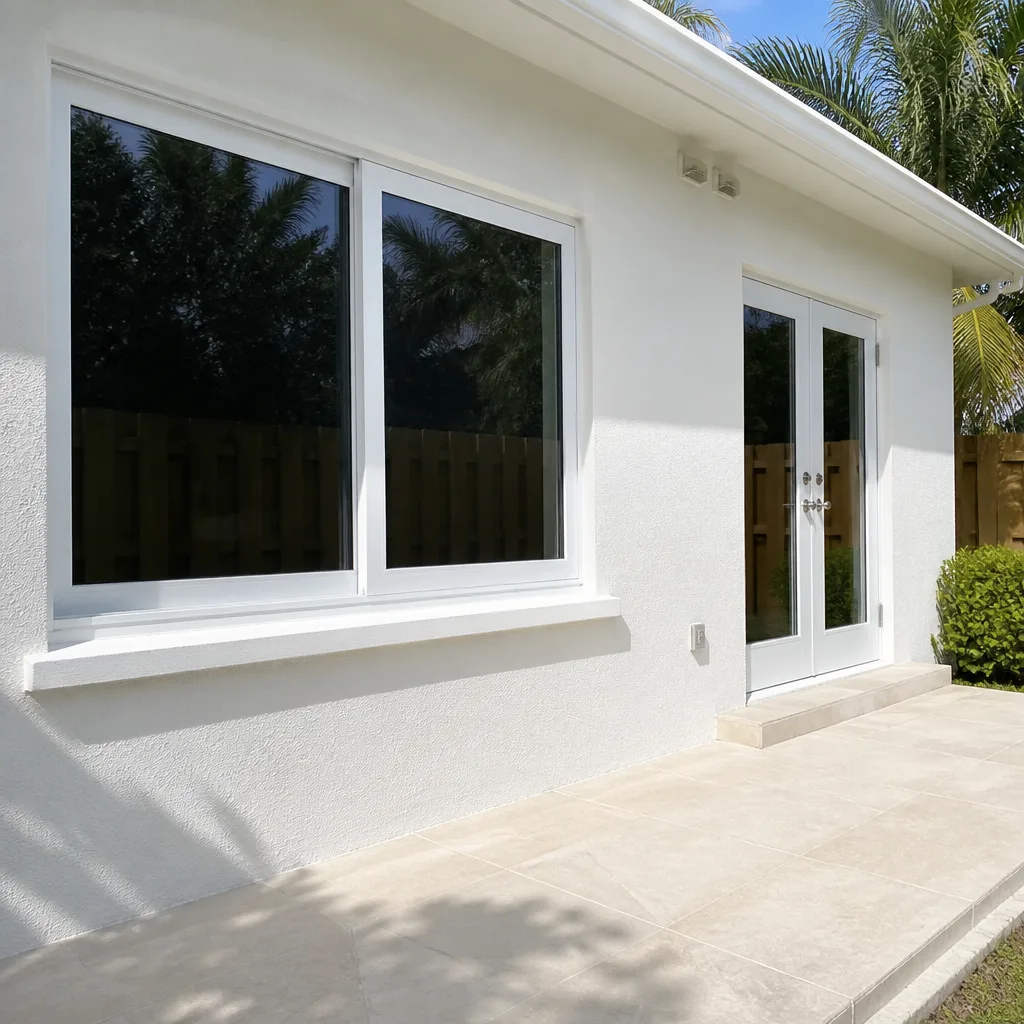 After
After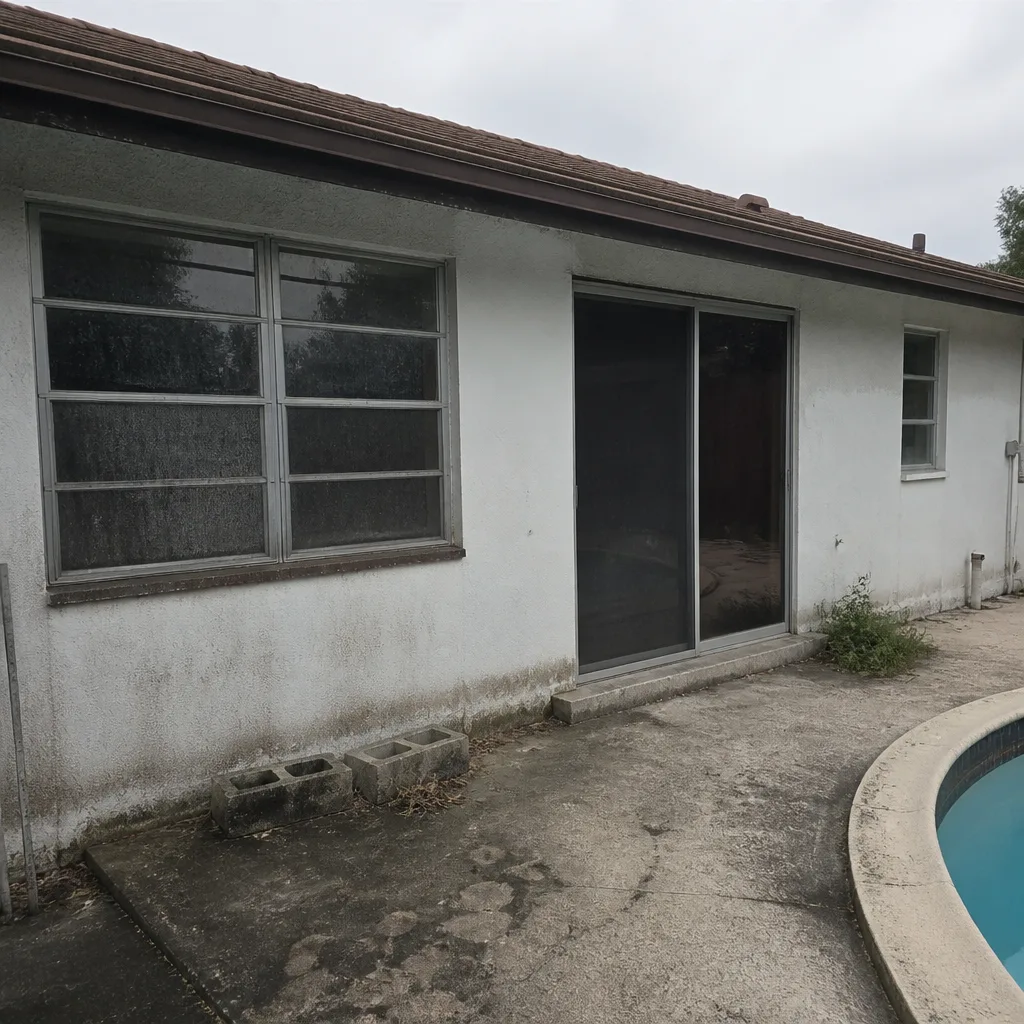 Before
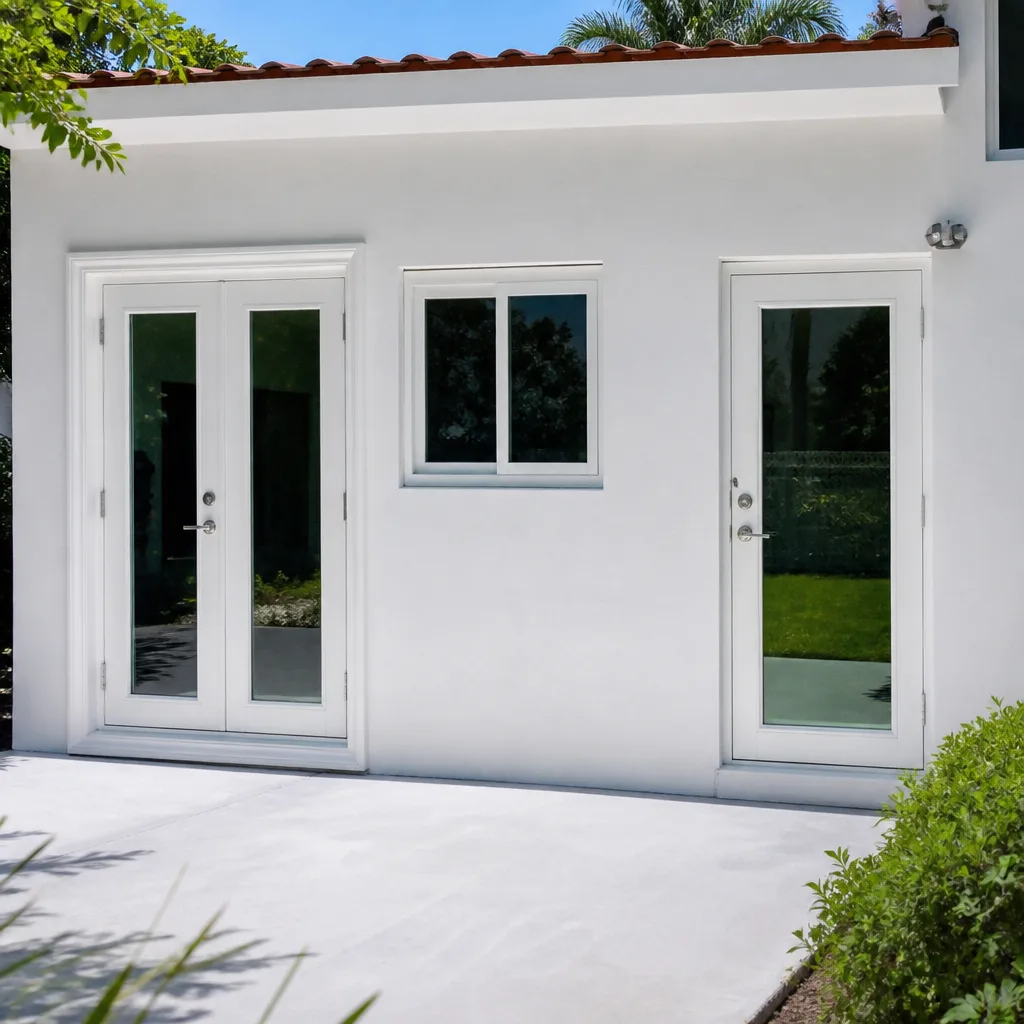 After
AfterSeasonal Windows & Doors Care for Hollywood: Year-Round Homeowner’s Guide
Hollywood doesn’t have a winter worth naming, but it has three environmental cycles that will find the weak point in your window or door assembly with mechanical precision. The 72-hour period before a named storm makes landfall is the worst time to discover that your impact door’s multipoint locking mechanism hasn’t been lubricated in 18 months - because the hardware that was stiff in April may not fully engage in September. In this guide and our more guides & resources, you’ll learn how to read the specific stress patterns that salt air, humidity swings, and hurricane-force wind cycles create on the openings in your home, and how to document what you find so the record protects your warranty and your insurance position.
Quick Answer
Seasonal window and door care in Hollywood means maintaining three environmental cycles, not four calendar quarters: a pre-hurricane hardware and sealant check completed by April 15 per the Window Installation Maintenance Checklist for Hollywood Homeowners, a post-storm water intrusion inspection within 14 days of wind or rain events, and a dry-season frame contraction assessment from November through March. The salt-air intensification period from January through March demands a specific hardware cleaning cadence to prevent chloride pitting. Document every inspection with dated photographs organized by opening.
Table of Contents
- Why Hollywood’s Climate Demands a Three-Cycle Approach
- Pre-Hurricane Season Checklist: The April 15 Deadline
- Post-Storm Inspection Protocol: Finding Hidden Water Intrusion
- Dry-Season Maintenance: Frame Contraction and Gap Tolerance
- Salt-Air Intensification: The 90-Day Window That Pits Hardware
- How to Document Every Seasonal Inspection
- Common Mistakes to Avoid
- When to Call a Professional
- Frequently Asked Questions
 Before
 After
AfterWhy Hollywood’s Climate Demands a Three-Cycle Approach
Most seasonal maintenance guides divide the year into four quarters. That framework fails in Hollywood because our environmental stressors don’t respect calendar boundaries. What we have instead are three distinct cycles, each with its own signature of damage and its own inspection protocol.
The Hurricane Cycle (June 1 - November 30): Wind-borne debris, rapid pressure changes, and sustained rainfall at volume. Impact-rated assemblies - the PGT WinGuard and CGI Sentinel lines we specify for coastal Hollywood openings - are engineered for this cycle, but their hardware and seals require pre-season verification to perform as designed.
The Salt-Air Intensification (typically January - March): Northeast trades and onshore flow from the Atlantic concentrate chloride deposition on exposed hardware. This isn’t gradual corrosion; it’s a 90-day window where unprotected stainless steel and zinc-coated components can develop pitting that compromises structural integrity.
The Dry Contraction Cycle (November - March): Relative humidity in Hollywood drops from summer peaks near 85% to winter lows in the mid-50s. Vinyl frames contract. Wood sashes shrink. The gap tolerances that were tight in August become pathways for wind-driven rain in December.
We’ve measured this on installations across Hollywood, from the single-family homes north of Sheridan Street to the townhome clusters near Young Circle. The pattern holds: the openings that fail are the ones that were inspected on a four-quarter schedule instead of a three-cycle schedule.
The Sightline Windows & Doors Hollywood home page lists the manufacturer lines we specify by performance tier and price range - PGT, CGI, CWS, ES Windows, ECO Window Systems, Mr-Glass, Therma-Tru, and ViewLux - because the right assembly for a Hollywood opening depends on which cycle stresses it most.
Pre-Hurricane Season Checklist: The April 15 Deadline

We set April 15 as the hard deadline for pre-hurricane season checks because it leaves six weeks before the June 1 statistical opening of the Atlantic season, and because hardware suppliers in South Florida experience predictable backorders once Memorial Day approaches. Waiting until May means waiting for parts.
Complete these three checks by April 15:
- Hardware Engagement Test: Cycle every lock, latch, and multipoint mechanism through its full range of motion. A multipoint lock on an impact door should engage with consistent resistance at all three points - top, center, and bottom. If the bottom bolt requires noticeably more force than the top, the door frame has likely settled or the keep plate has shifted. This is a pass/fail test: consistent engagement is pass; any point that binds, skips, or requires excessive force is fail. Mark it for adjustment.
- Weep Hole Clearance: Impact windows and sliding doors in Hollywood rely on weep holes to drain water that penetrates the exterior gasket during wind-driven rain events. A weep hole blocked by paint, stucco overspray, or insect debris turns the sill track into a reservoir. Check with a piece of 16-gauge wire - if it won’t pass through, the hole is obstructed. Pass/fail: wire passes freely, or it doesn’t.
- Sealant Inspection: Examine the perimeter sealant bead between frame and wall on every opening. In Hollywood’s UV exposure, quality polyurethane sealants typically show surface crazing after 36-48 months. Silicone-modified formulations last longer but still degrade at the bond line. Pass/fail criteria: no separation from either substrate wider than 1/16 inch, no through-cracks, no areas where the sealant has pulled away to expose the rough opening. Any of these conditions is fail.
We’ve found that Hollywood homes built during the 2015-2020 construction surge - particularly the infill developments between Stirling Road and Hollywood Boulevard - show sealant degradation faster than older construction. The reason is application timing: sealant applied to green framing or in high-humidity conditions doesn’t achieve full adhesion.
If any check fails, the correction belongs in writing before June 1. Window replacement in Hollywood may be unnecessary; often the fix is hardware adjustment, weep hole cleaning, or selective sealant removal and reapplication. But the documentation matters. A written scope with a fixed price - Haven Clause 1 - lets you schedule the work without the pressure of an approaching storm.
Post-Storm Inspection Protocol: Finding Hidden Water Intrusion
The damage that matters most doesn’t show up during the storm. It shows up 7 to 14 days later, when water that entered through a compromised seal has migrated far enough to stain drywall or swell trim. By then, the connection to the storm event is harder to prove to an insurer.
Inspect these four locations within 14 days of any named storm, tropical storm, or sustained wind event above 40 mph:
- The Interior Sill and Subsill: Remove any window treatment and examine the painted or finished surface directly below the sash. Look for discoloration that follows the grain of wood trim, or any paint bubbling on MDF casing. In Hollywood’s climate, mold colonization begins 48-72 hours after moisture introduction. A musty odor at the sill is a positive indicator of water intrusion even when visible staining is minimal.
- The Head Jamb Corner: Water that overtops the exterior drip cap or enters through a compromised head flashing collects at the upper corners of the rough opening. Check where the head jamb meets the side jamb on both sides. On painted surfaces, look for a faint water line or alligatoring. On wallpaper, look for adhesive failure at the corner seam.
- The Lock Stile Meeting Rail (Double-Hungs and Sliders):strong> The horizontal joint where sashes meet is a pressure point during wind-driven rain. Water that penetrates the exterior weatherstrip runs down the lock stile and pools at the sill. But first, it saturates the meeting rail itself. Open the sash and inspect the underside of the meeting rail with a flashlight. Any darkening of unfinished wood, or corrosion on the balance shoe or tilt latch, indicates water has found this path.
- The Door Threshold Substrate: For in-swing and out-swing doors, remove the threshold cap if it’s designed for removal (many Therma-Tru and PGT units are). Inspect the rough sill beneath for moisture staining or softness. In Hollywood’s slab-on-grade construction, water that breaches the threshold often pools on the concrete pan before it shows as interior damage. A moisture meter reading above 17% on wood or 5% on concrete indicates active intrusion.
Document each location with dated photographs, even if no damage is found. The absence of damage is itself a data point. If damage appears later, the prior clean photograph establishes the storm as the proximate cause.
We’ve performed post-storm inspections across Hollywood after Hurricane Irma (2017), after the near-misses of 2022, and after the flooding events of 2023 that weren’t named storms but carried sustained onshore flow for 72 hours. The pattern is consistent: the openings that developed interior damage were the ones where the exterior sealant or hardware had been flagged in prior inspections but not corrected.
Dry-Season Maintenance: Frame Contraction and Gap Tolerance
Hollywood’s dry season runs November through March, but the critical period for window and door assemblies is the six-week span from mid-December through January, when humidity typically bottoms out and nighttime temperatures occasionally drop below 50°F. This combination causes measurable frame contraction.
Vinyl frames move the most. A typical PVC extrusion expands and contracts at roughly 3.0 x 10^-5 inches per inch per degree Fahrenheit. For a 72-inch sliding door frame, a 30-degree temperature swing creates approximately 0.065 inches of linear movement - enough to change the engagement geometry of a multipoint lock if the keep plates were shimmed tight in August.
Wood frames move orthotropically: more across the grain than with it. A wood sash stile can shrink 1/32 inch in width during the dry season while losing almost nothing in length. This differential movement stresses the glazing compound or exterior sealant at the glass-to-frame interface.
The acceptable gap tolerance at the sill depends on the assembly type:
- Sliding windows and doors: The sill track should maintain 1/16 to 1/8 inch clearance between the bottom of the sash and the top of the track fin. Below 1/16 inch, the sash binds; above 1/8 inch, wind-driven rain can overtop the track during a storm event.
- Single-hung and double-hung windows: The meeting rail should seat with uniform pressure across its full width. A visible light gap at either end of the meeting rail during the dry season indicates excessive frame contraction and potential for water intrusion when humidity rises and the gap closes unevenly.
- Out-swing doors: The threshold dam should maintain contact with the door bottom sweep without compressing it more than 50% of its uncompressed height. Over-compression in humid months leads to premature sweep wear; under-compression in dry months allows air and water infiltration.
In Hollywood’s coastal neighborhoods - particularly east of Federal Highway where the Atlantic moderates temperature swings - we’ve observed less dramatic contraction than in western Hollywood near the wetlands, where radiative cooling on clear nights is more pronounced. The inspection protocol is the same; the frequency of adjustment differs.
Door installation in Hollywood under the Haven Standard includes a dry-season follow-up for full-frame replacements in the first year, because the initial shim and fastener placement is calibrated to summer conditions. The measured survey we leave with you documents the as-installed gaps, so the dry-season check has a baseline for comparison.
Salt-Air Intensification: The 90-Day Window That Pits Hardware
The chloride deposition rate on exposed metal surfaces in Hollywood peaks during a 90-day window that typically runs January through March. This isn’t anecdotal; it’s a function of prevailing wind direction, sea surface temperature, and atmospheric stability. When the Bermuda High shifts and northeast trades bring marine air onshore for sustained periods, the salt load on hardware increases by a factor of three to five compared to summer months.
The damage mechanism is pitting corrosion. Chloride ions penetrate the passive oxide layer on stainless steel, creating localized electrochemical cells. Once pitting initiates, it propagates rapidly because the chemistry inside the pit becomes autocatalytic. A hinge or lock face that looks sound in December can show visible pitting by April if the chloride isn’t removed.
The cleaning cadence for this window:
- Weekly during sustained onshore flow: Rinse exposed hardware with fresh water. This means hinges, handles, lock faces, and any exposed fastener heads. A garden hose with a gentle spray pattern is sufficient; pressure washing can drive water past seals into the mechanism.
- Biweekly: Wipe dry and apply a thin film of silicone-based lubricant to moving parts. Avoid petroleum-based lubricants; they attract and hold particulate matter, including salt crystals.
- Monthly: Inspect for early pitting with a 10x loupe or strong reading glass. Pitting appears as tiny dark spots that don’t wipe away. If found, the component needs replacement, not more cleaning - the pit wall geometry makes it impossible to restore passivation in the field.
We’ve replaced hardware on impact doors in Hollywood’s beachfront condos - particularly the towers along South Ocean Drive - where the cleaning cadence was annual instead of seasonal. The components were CGI and PGT factory hardware, quality material, but no stainless steel formulation survives indefinite chloride exposure without maintenance.
The ViewLux coastal hardware line we specify for high-exposure Hollywood openings uses 316-grade stainless with enhanced molybdenum content, which extends the maintenance interval but doesn’t eliminate it. The specification matters because the replacement cost for a full multipoint lock set on an 8-foot impact door runs $340-$580 in material alone, plus labor.
How to Document Every Seasonal Inspection
Documentation serves two purposes: it supports warranty claims if a component fails, and it supports insurance claims if storm damage occurs. The insurer’s first question after a water intrusion claim is whether the opening was maintained. A dated photograph record answers that question with evidence, not assertion.
Organize your documentation by opening, not by date. Each window and door in your home should have a unique identifier: “Living Room North,” “Master Bedroom East,” “Garage Service Door,” etc. Create a digital folder for each opening, and store photographs with filenames that include the date and the inspection type.
The minimum photograph set for each seasonal inspection:
- Wide context shot: The full opening from the interior, showing surrounding wall and floor. This establishes that the photograph was taken at the stated location.
- Hardware close-up: Each lock, latch, or hinge, with the mechanism in both open and closed positions. Date-stamp visible.
- Sealant bead: The perimeter sealant from a consistent angle - we recommend approximately 45 degrees from the interior, showing both the sealant surface and the frame-to-wall joint.
- Sill or threshold: The horizontal surface at the bottom of the opening, with any weep holes or drainage features visible.
- Any anomaly found: If a check fails, photograph the failure with a ruler or coin for scale, and photograph the same location from the same angle after correction.
Store the photographs in cloud storage with automatic backup. A local hard drive that fails the week you need documentation for an insurance adjuster is worthless.
We’ve reviewed customer photograph records during warranty and insurance support calls at Sightline. The records that resolve claims quickly share one characteristic: they’re organized by opening, with consistent angles and clear date stamps. The records that create delays are the ones where the homeowner has 200 undifferentiated photographs from various dates and can’t prove which opening is which.
The Haven Standard requires that we leave you a documented photo record of every installation we perform. We encourage you to continue that record with your seasonal inspections. The format doesn’t matter; the consistency and organization do.
Common Mistakes to Avoid
- Using a pressure washer on window and door assemblies. The high-pressure stream forces water past weatherstripping and into the rough opening, and it can damage the exterior sealant bead. In Hollywood’s climate, water trapped in the wall cavity doesn’t dry quickly enough to prevent mold. Use a garden hose with a gentle spray, or a soft brush and bucket.
- Applying silicone lubricant to the wrong surfaces. Silicone spray on the glass creates a film that attracts dust and reduces visibility. On vinyl frames, some petroleum-based products cause plasticizer migration and surface crazing. Apply lubricant only to metal-to-metal contact points specified in the manufacturer’s hardware schedule.
- Ignoring the April 15 deadline because “it’s just a guideline.” In 18,000+ installations since 2012, we’ve seen the pattern repeat: the homeowner who defers pre-season maintenance discovers the binding lock or blocked weep hole when the hardware supplier is backordered and the storm is 48 hours from landfall. The deadline exists because the supply chain has its own timeline.
- Assuming impact-rated glass means impact-proof assembly. The glass is rated; the frame, hardware, and installation are what keep it in the opening during a storm. We’ve inspected Hollywood homes where the impact glass was intact but the frame had pulled from the wall because the fastener schedule was inadequate or the sealant had failed. The rating applies to the tested assembly, not to the glass alone.
- Documenting only problems, not baseline conditions. An insurance adjuster needs to see what the opening looked like before the storm, not just after. Photograph every opening every season, even when no defect is found. The clean baseline photograph is often the most valuable document in a disputed claim.
- Using the same maintenance schedule as a friend in Orlando or Tampa. Hollywood’s salt-air exposure is higher than Orlando’s, and its humidity profile differs from Tampa’s. The three-cycle schedule in this guide is specific to Broward County’s coastal climate. A schedule developed for inland Florida misses the salt-air intensification window entirely.
- Waiting for visible interior damage before inspecting after a storm. By the time drywall stains appear, water has been in the wall cavity for days or weeks. The 7-14 day post-storm inspection protocol catches intrusion before it becomes interior damage, when the repair is still sealant or hardware adjustment rather than drywall, insulation, and framing.
When to Call a Professional
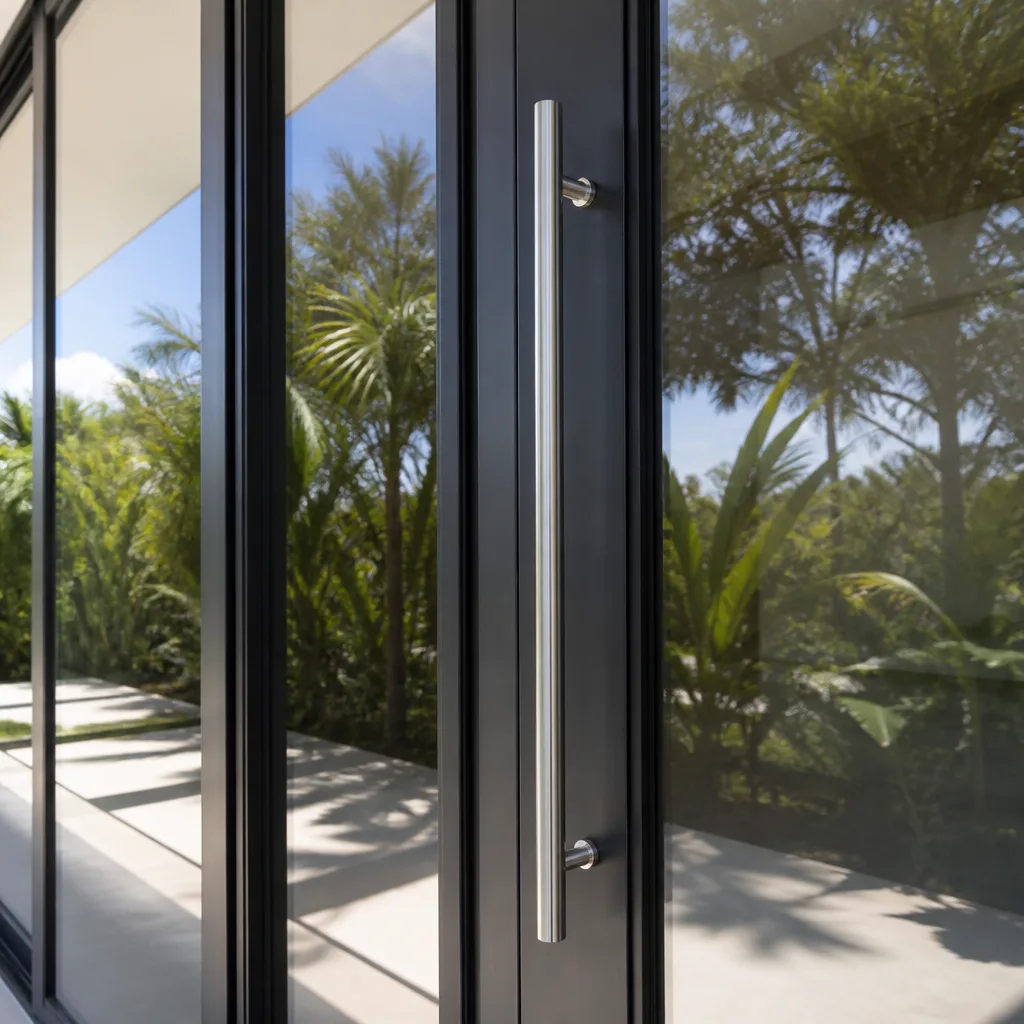
Some conditions exceed homeowner maintenance and require documented professional assessment. Call for evaluation if: a multipoint lock fails to engage at any point after cleaning and lubrication; you find pitting corrosion on any structural hardware component; the gap at any sash or door frame exceeds 1/4 inch in any season; water intrusion appears at any location other than the four standard points (which indicates an atypical failure mode); or your impact-rated assembly has been struck by wind-borne debris, even if visible damage is minimal. Impact resistance is a system property; hidden frame damage can compromise the next event.
Sightline Windows & Doors Hollywood offers free estimates in Hollywood - call (754) 714-7309. Every assessment includes a measured survey you keep, a written scope with fixed pricing, and a documented photo record. The 365-Day Done Right Promise applies to any correction we recommend.
Frequently Asked Questions
Professional seasonal maintenance for a typical Hollywood home with 8-12 openings runs $180-$340 for inspection, cleaning, lubrication, and minor adjustment; see our Windows & Doors Cost Breakdown: The Hollywood Homeowner’s Reference for 2026 for detailed pricing context. If sealant replacement or hardware repair is needed, add $85-$160 per opening depending on frame material and access difficulty. Call (754) 714-7309 for an exact quote - estimates are free, and we review competitor written estimates at no charge under our Free Second Opinion policy.
A homeowner with basic tools can complete the hardware engagement test, weep hole clearance check, and sealant visual inspection. The pass/fail criteria in this guide are designed for homeowner use. However, any condition that fails should be documented with photographs and assessed by a technician who can measure frame squareness, check fastener torque, and specify the correct sealant for the substrate. The inspection is DIY; the correction often isn’t.
A thorough inspection of 8-12 openings, with photography and documentation, takes 90-120 minutes for a homeowner working methodically. A professional technician with inspection tools and established protocols completes the same scope in 45-60 minutes. The time investment is front-loaded; once your documentation system is established, subsequent inspections move faster because you have baseline photographs for comparison.
No. Haven Clause 1 of the Haven Standard requires that the written price and the measured survey are the same document. The price we quote is the price you pay. If we discover concealed damage during work, we document it, stop, and provide a revised written scope before proceeding. No change orders on approved work.
Routine maintenance - cleaning, lubrication, hardware adjustment, and selective sealant repair - does not require permitting. Full-frame replacement, structural modification to the rough opening, or conversion from non-impact to impact-rated assemblies requires permitting through the City of Hollywood Building Division; our Windows & Doors Permits, Codes & Inspections in FL: What You Need to Know explains the process. We pull all required permits as standard practice on replacement work, with inspection scheduling included in our scope.
The impact rating applies to the original tested assembly: glass, frame, hardware, and installation method together. Individual components don’t “expire,” but the assembly’s rating is compromised if: the frame has been modified, the glass has been replaced with non-rated material, the hardware has been substituted with non-OEM parts, or the installation sealant has failed. A professional inspection can verify assembly integrity against the original NOA (Notice of Acceptance) documentation. We maintain NOA reference files for all manufacturer lines we install and can verify your assembly against the original test standard.
Blocked weep holes on sliding windows and doors. The design depends on gravity drainage through small openings, and Hollywood’s pollen season, insect activity, and occasional stucco or paint overspray create multiple blockage pathways. It’s the simplest check on the list and the most commonly neglected. In our experience, the homes that develop sill-track water accumulation are almost always the ones where weep holes haven’t been cleared in 24 months or more.
The Bottom Line
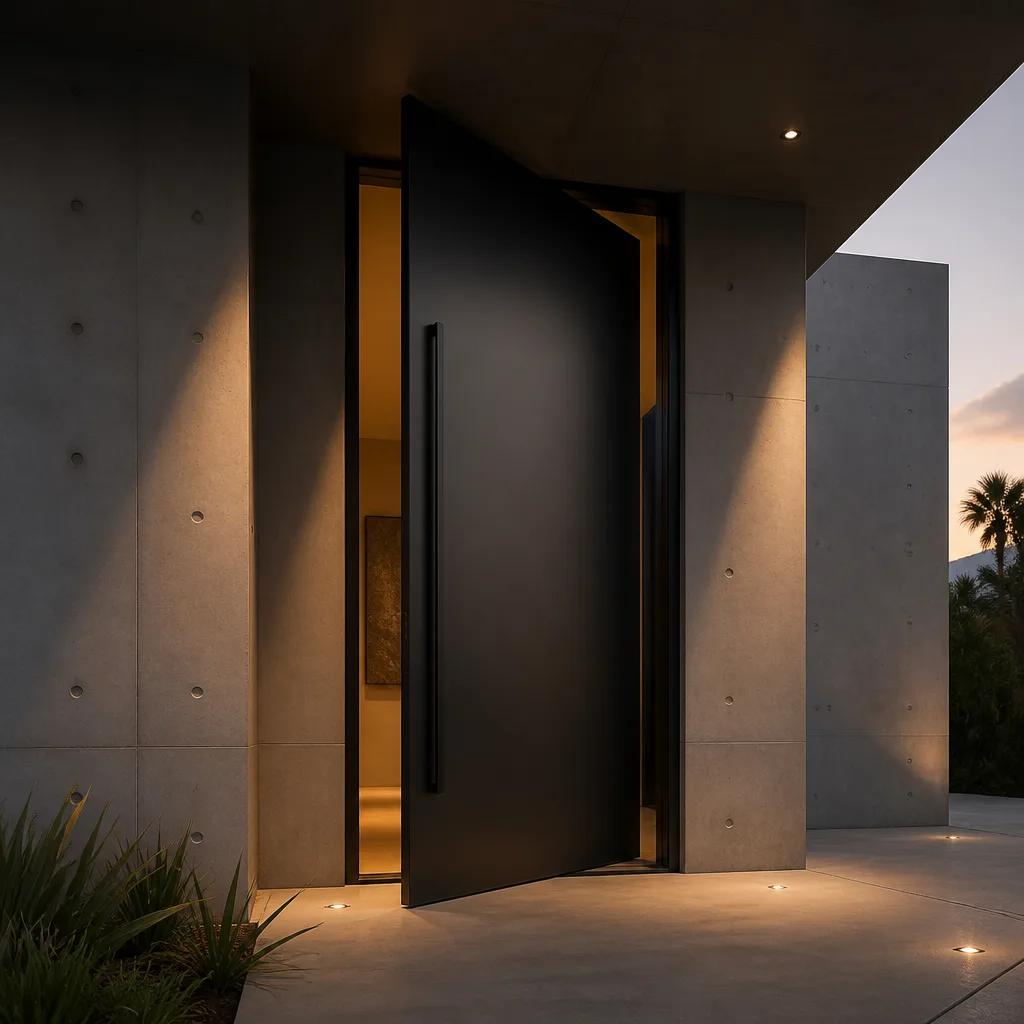
Hollywood’s window and door assemblies face three environmental cycles, not four seasons. The pre-hurricane checklist by April 15, the post-storm inspection within 14 days, and the dry-season contraction assessment from November through March - plus the salt-air hardware cleaning cadence from January through March - form a maintenance system that protects your warranty position, your insurance documentation, and the performance of the opening itself. Document every inspection with dated photographs organized by opening. The record you keep is the evidence you’ll need.
Call (754) 714-7309 to schedule your free estimate. Every Sightline assessment includes a measured survey you keep, a written price before any work starts, and a documented photo record when the job is done.
Written by Sonia Raman, Owner at Sightline Windows & Doors Hollywood, serving Hollywood since 2012.